




June 17, 2026
Dear NashvilleHealth Supporters and Network:
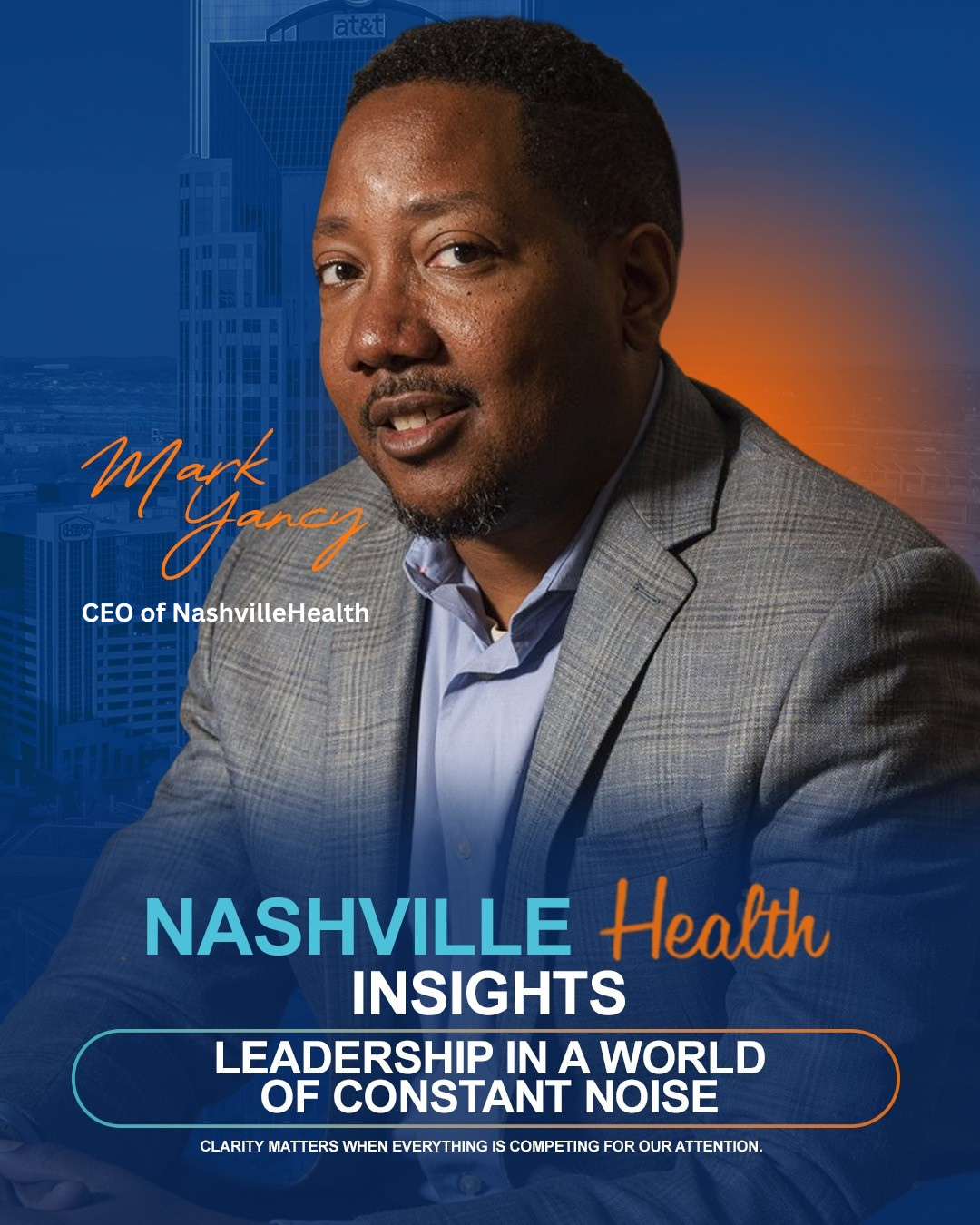
In our current “always on” smartphone and digital environment, it is more necessary than ever that we don’t allow what’s immediate to overshadow what’s important. That latter part of the previous sentence is a leadership maxim. As a convener and collaborative impact architect, maxims provide for us concise (and sometimes precise) ways to reveal what really matters. As we are bombarded and overstimulated with information and an unending flow of things clamoring for our attention, maxims have a way of inspiring us and others at the same time. Here are a just a few that relate to our leadership thought process:
Bring calm to confusion, bring planning to problems, and bring intention to issues
Slow is steady and solid, fast is flimsy and frail
Every person has the opportunity to serve as a bridge for another
If we look closely enough, you can leverage a maxim as a lens to learn from other leaders and organizations operating in a way that should be motivating or mimicked. Here a few examples of how we’ve identified inspiring leadership and organizational behaviors in our world of health and well-being that inspire us to lead well.
Article: 988 hotline’s launch is linked to thousands of fewer suicide deaths among teens and young adults
What: A study published in JAMA found that nearly 4,400 fewer teenagers and young adults died by suicide in the first two-and-a-half years after the 988 crisis lifeline launched in 2022 — an 11% decline below what researchers had projected based on a long upward trend. The ten states that saw the largest increases in 988 call volume after launch experienced an 18% drop in suicide deaths, compared to roughly 11% in states with the lowest call volume increases. Researchers compared outcomes to the United Kingdom, which made no similar changes and saw no comparable decline.
Why It Matters: Promising developments in public health should be promoted. The 988 initiative is a direct demonstration of the maxim to bring calm to confusion, bring planning to problems, bring intention to issues. A $1.5 billion federal commitment, a simplified phone number, and expanded workforce capacity combined to produce a measurable, life-saving result. Tennessee was among the states with lower call volume increases, suggesting there is still significant opportunity to ensure Tennesseans—particularly young people—know that help is a three-digit call away. The process of building this system, step by step, and making it simple and readily accessible against a dire challenge, is what produced the outcome.
Article: How States Are Navigating the Intersection of Disasters and Public Health
What: Pew’s research finds that states are increasingly recognizing that extreme weather is a public health emergency in addition to being an infrastructure problem. Heat waves drive hospitalizations, wildfire smoke worsens chronic respiratory illness, and repeated disasters compound long-term community strain. States that are faring best are those that made intentional early and sustained investments in cross-agency collaboration, brought together as many as 26 agencies in some cases, and built trust with community-based groups—including interfaith networks—to identify vulnerable residents and amplify health communication before crises hit.
Why It Matters: Tennessee is not immune to these pressures, and Middle Tennessee’s geography and climate trajectory make resilience planning a public health imperative. This article echoes the maxim that slow is steady and solid—the states making the most progress are those that invested in long-term planning and cross-sector relationships before a crisis demanded it. We must have a willingness to take on the complexity of cross-sector health and climate work to be best positioned to protect our residents when the next weather event or public health emergency arrives. This requires intentional relationship building and resource sharing over a sustained period of time.
Article: HCA Healthcare Colleagues Volunteer More Than 41,800 Hours During Annual Days of Service Initiative
What: HCA announced the results of its seventh annual “We Show Up for Our Communities” initiative. Nearly 3,000 Nashville-area colleagues contributed close to 13,500 volunteer hours, supporting 475 local nonprofits—including NashvilleHealth partner Second Harvest Food Bank of Middle Tennessee, where HCA staff packed more than 3,000 weekend snack bags for Metro Nashville Public Schools students. Nationally, over 41,800 hours were donated and the HCA Healthcare Foundation’s Middle Tennessee Fund awarded more than $8.3 million in grants to 227 nonprofit agencies focused on health, basic needs, and education.
Why It Matters: This story is an embodiment of the leadership maxim, every person has the opportunity to serve as a bridge for another. Beyond donations, they are showing up, in person, in the neighborhoods where they live and work, building the kind of social fabric that neighbors supporting neighbors requires. For NashvilleHealth, it is also a reminder that convening— bringing together business, healthcare, and community sectors—is what amplifies individual acts of service to become something more systemic and sustaining.
Sincerely,
Mark H. Yancy
Chief Executive Officer
NashvilleHealth
Mark H. Yancy, MPH
Chief Executive Officer
NashvilleHealth
myancy@nashvillehealth.org
www.nashvillehealth.org
